
Love Is in the Air… and in the Lab!
Valentine’s Day Science Activities for Curious Kids
At The Community Classroom, we believe that some of the best learning happens when kids are wondering, noticing, and getting their hands a little messy. Valentine’s Day is the perfect excuse to lean into that kind of joyful curiosity—because science, like love, is all about connection, observation, and discovery.
If you’re a family or teacher looking for Valentine’s Day activities that go beyond candy and cards, we’ve got you covered. This year, we’re celebrating with Love Lab—a heart-filled afternoon of science that centers one of our favorite (and most important!) science process skills: observation.
Below are a few highlights from our Love Lab plans that you can try at home, bring into your classroom, or experience with us at camp on February 4th.
Fizzy Heart Science
Bubbles, color, fizz—and so much to notice
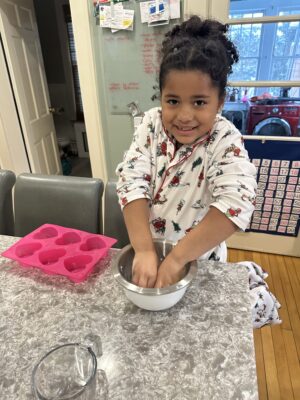
This classic baking soda and vinegar experiment becomes extra magical when poured into heart-shaped molds. Plus the mixing of the baking soda and water adds a cool and welcomed sensory element (with a bit of a mess, but learning is messy!). We tried this activity from Sugar, Spice, and Glitter and loved it!
After making the fizzy hearts and letting them hang out in the freezer for a bit (actually we had them outside in the snow and freezing temps), kids can use vinegar to make the hearts fizz. We found a bunch of medicine droppers in our cabinet that we used to drop the vinegar (and then spark the conversations!).
Kids observe:
- What happens when an acid and a base mix
- How fast or slow fizzing happens—and what fizzing is!
- What changes when they adjust the amounts of the ingredients
Even though some of the concepts are geared towards older kids, this activity is perfect for younger learners when the focus is on science process skills, especially observation. Kids make predictions, test ideas, and compare results—no worksheets required.
✨ Tip: Ask questions like What do you notice first? What changed? What stayed the same?
Bath Bomb Hearts
This is a fun activity that ends in a gift to give to a friend or loved one (or keep as the bath-loving scientist)!. Kids mix baking soda, citric acid, epsom salt, essential oils, and color to create heart-shaped bath bombs. Whether you frame this as physical vs. chemical change or stick with observation, the learning is rich and the conversations are richer:
- How does the texture change as we mix?
- What happens when we add water?
- What do we predict will happen later in the bath?
Pre-measured ingredients can keep things accessible, but I love to have kids practice measuring and pouring, and kids love packaging their finished creations to share with family. 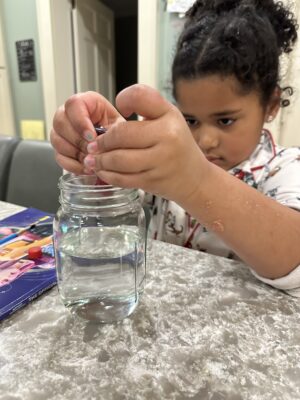
Tip: We added WAY too much water and our bath bombs kept growing overnight (they almost doubled in size). They were still great bubblers in the tub, but we recommend keeping the water really light so you don’t have a volcano-errupting-lava mess from ever-growing bath bombs. But even those missteps make great conversion starters as we explored what caused the growth. Sometimes the learning is in the mistakes!
Pumping Heart Model Experiment
How does your heart really work?
Activity: Build a simple heart model to demonstrate how the heart pumps. Here are directions!
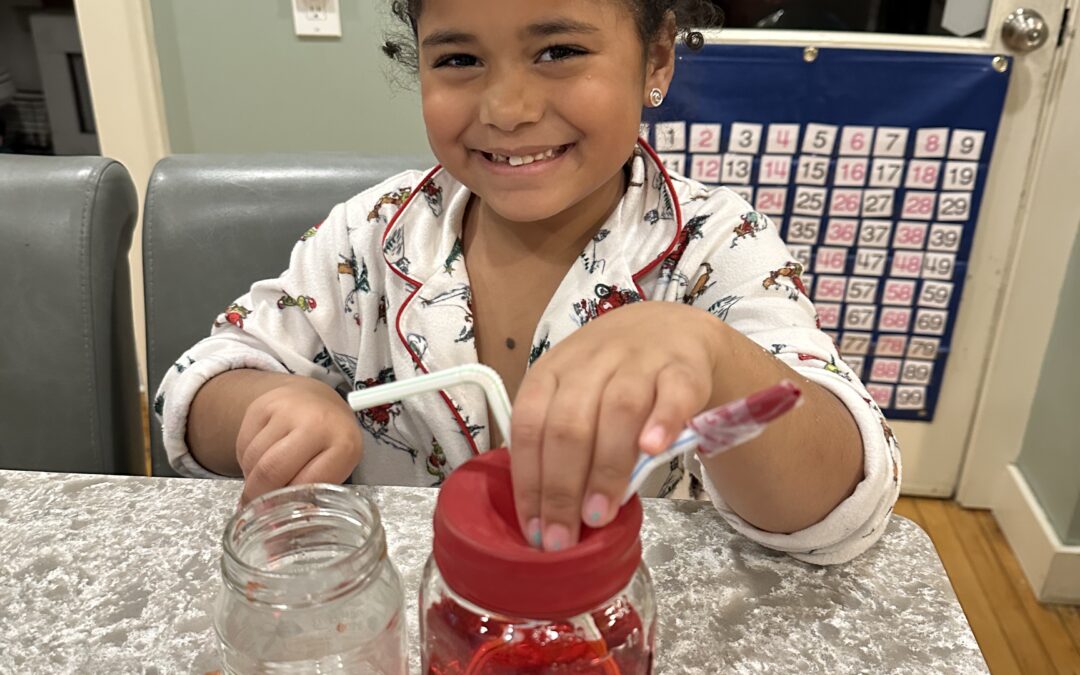
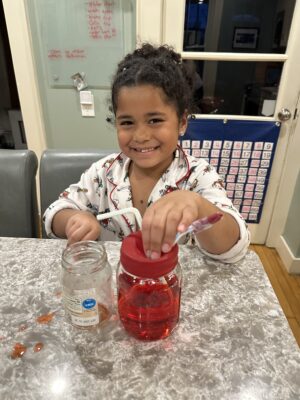
Build a simple pumping heart model using a balloon, bottles or mason jars, and straws. By squeezing and releasing, they can see how blood moves through the heart.
This hands-on model introduces:
- Basic heart anatomy
- Cause and effect
- Scale, pressure, and motion (if your kids are ready to explore those topics!).
We pair the build with visuals, diagrams, and—when possible—a real stethoscope so kids can listen to their own hearts. There’s nothing quite like that moment when learning becomes personal. We found the resources below to be helpful:
- This PDF is super helpful also for exploring parts of the heart!
- I thought this was helpful too as a primer. And this!
- And this pdf has a heart model that kids can color.
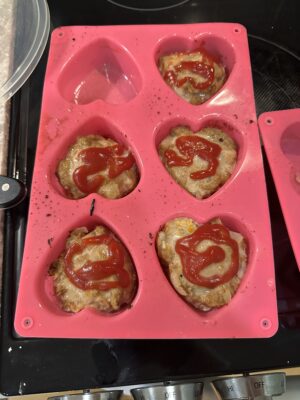
Bonus idea! We made turkey meatloaf for dinner and used the heart muffin tins, adding plenty of ketchup (blood) on top. Sick, I know, but hey. It’s science! And it got my kid eating her dinner.
Join Us for Love Lab!
If all of this sounds like your kind of Valentine’s Day, we’d love to have you join us.
💖 Love Lab: Valentine’s Day Science Camp
🕛 12–4 PM (Half-Day Camp) on February 4th (which is a half day for Campus School and Northampton Public Schools)
📍 Hosted at High Five Books (one of our favorite community partners!)
We currently have just 6 spots left, and we’d love to welcome a few more curious scientists into the lab. Campers will explore, create, observe, and fall a little more in love with science—all in a cozy, book-filled space.
👉 Register soon to save your spot, and help us spread the love (and the learning) this Valentine’s Day.
With curiosity and heart,
The Community Classroom